
Which GPU should you actually use for embedding workloads?
Selecting the right serving engine for your embedding model can dramatically outperform hardware upgrades, yielding up to an 11x throughput increase on the same GPU.
All
 Skip to main content
Blog
Learn how Runpod's Model Store eliminates redundant downloads and uses a tiered architecture with smart scheduling to drastically reduce AI model cold start times.


We built Model Store and the start of a private Model Repository because we got tired of re-downloading the same multi-gigabyte weights from Hugging Face or some S3 bucket every single cold start. If you're running serverless GPU inference at any scale, this cost compounds fast. Now there's a tiered cache: host-local disk first, a datacenter-scoped network volume second, remote origin only when nothing closer has the bytes.
The other piece is explicit model version pinning, so rollouts and rollbacks aren't a guessing game, plus scheduling that actually knows where a model's bytes physically exist before it decides where to run a worker.
If you're serving large artifacts at scale, most of your wins come down to three questions: where do the bytes live, who's responsible for moving them, and when is it actually safe to schedule a worker.
Model weights are large, deployments are frequent, and traffic spikes without warning. If your only move on a cold start is "download from origin," then you've got three problems stacked on top of each other.
First, your cold-start latency is almost completely transfer time. Your code isn't slow, the network is. Second, your reliability is now whatever Hugging Face's uptime is that day, which you don't control. Third, every host that schedules a worker for that model downloads the exact same bytes independently, and that's a lot of wasted bandwidth.
And there's a question that's more challenging than it should be to answer: which model version is actually serving traffic right now? If workers are pulling "latest" or whatever happened to get cached, good luck answering that with confidence during an incident.
We wanted the deploy flow to stay simple, serving to get more predictable, and the scheduler to use the fact that model artifacts might already be sitting somewhere close by.
This blog post explains how and why we built our Model Store.
We treated model serving as an artifact distribution problem and this guided three major design choices:
There's a serving lifecycle: a worker starts, loads a model from a known path, and starts. And there's an artifact lifecycle: files get fetched, verified, cached, eventually evicted. Mix these up and you'll spend a lot of time debugging the wrong layer.
Making the artifact lifecycle explicit is what lets the serving lifecycle be boring. A worker that already knows exactly where its bytes are, and that they're verified, has nothing interesting to do at startup. That's the whole point.
Three projects are involved:
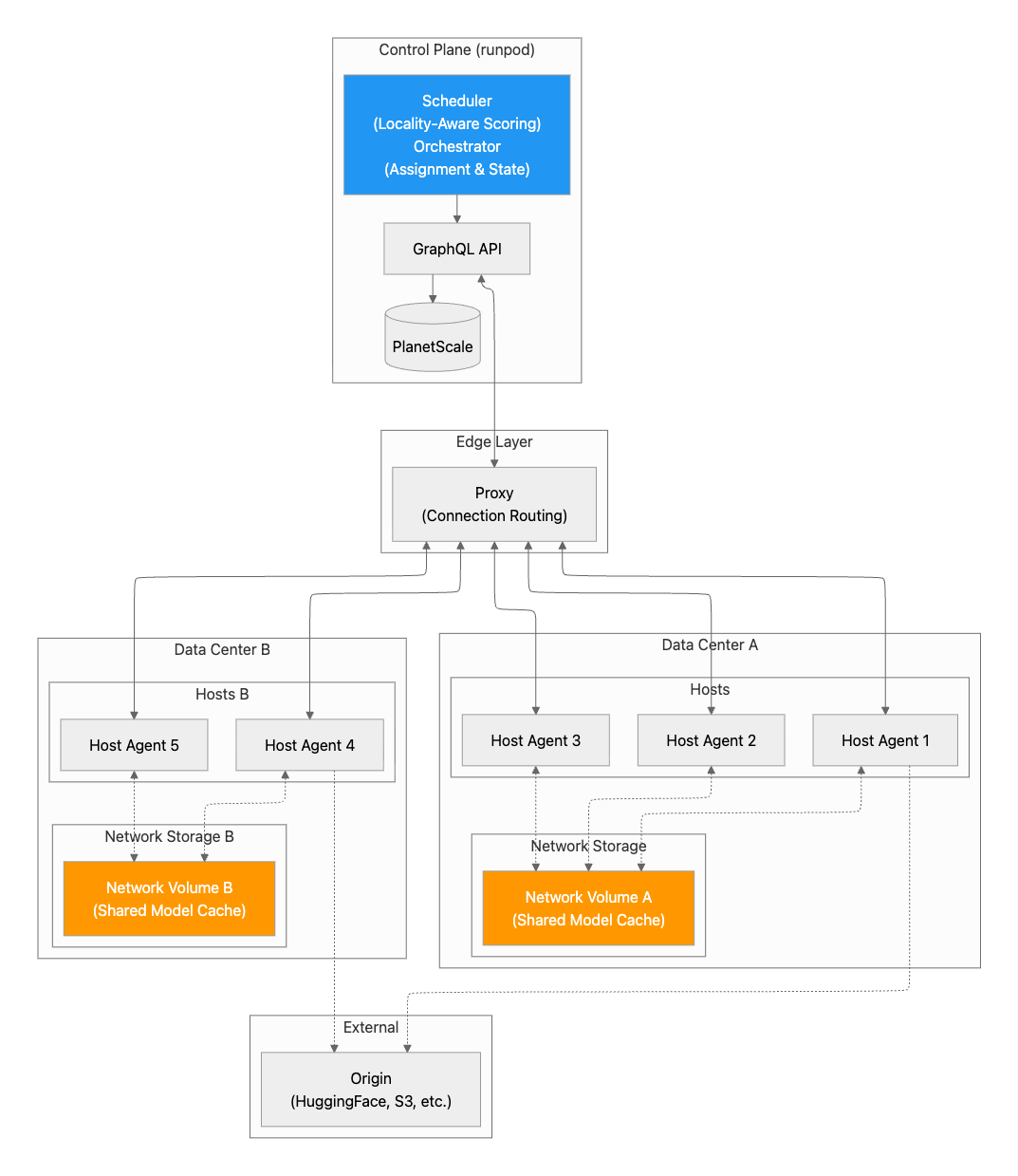
Figure 1. Architectural overview of multi-component communication.
When we first started, every scale-out re-downloaded from the origin, independently, on every host. This improvement assigns a model to a network volume once per datacenter, then defers scheduling additional workers until that download finishes. One download, then everyone in that datacenter reads the shared copy.
If you're debugging a slow scale-out: a host that stops reporting progress gets treated as stalled after about five minutes of silence. It doesn't hang forever waiting.
Four things actually do the reliability work here, not vibes, but actual mechanisms.
Optimize for a friction-free loop over a public catalogue, early. We aligned on utility over discovery: import, fine-tune, version, and one-click deploy mattered more than a browsable catalogue. A catalogue solves a discovery problem. We had a workflow problem first, so that's what we fixed first.
Explicit model versioning and version pinning. Pin model@version instead of trusting "latest," and "what's actually serving" stops being a mystery. Rollbacks become something you do on purpose, not something you cross your fingers about. This matters most during incidents: if you can't answer "which exact version is running" in under thirty seconds, you're debugging blind.
Defer scheduling until artifacts are ready. This sounds obvious until you've actually watched the alternative: a scale-out burst hits hosts that don't have the model yet, and now you've got a stampede of redundant downloads and workers coming up at wildly different times. Deferring kills that problem outright.
Datacenter-scoped shared cache via network volumes. One download benefits every host in that datacenter, not just the first one that happened to need it.
We looked at two alternatives and passed on both. Always pulling from Hugging Face or S3 is simplest, but it's slow at scale and you inherit every outage upstream. Pre-baking models into container images gets you a faster startup sometimes, but the images get huge, iteration slows down, and versioning turns into a mess. We saw this firsthand with the ComfyUI worker line: pre-baked variants per model family were the old pattern, and moving to a modular base image was the better call long-term.
Make where the bytes live an explicit part of your architecture. Don't let it be something you stumble into while debugging.
Treat model artifacts as a first-class system, not a side effect of container startup. Treat them like an afterthought and you get mystery latency nobody can explain.
Use orchestration to turn distributed storage into predictable runtime behavior. The storage layer itself doesn't need to be exotic. The coordination on top of it is where reliability effectively comes from.
If we did this again, we'd build customer-facing visibility into cache tier and model version usage earlier, instead of treating it as a follow-on. And the lesson that generalizes past this one project: the more explicit your state machine, the less guesswork you're stuck with when something breaks.
We've already shipped cached models on Runpod Serverless. Pick a Hugging Face model when you configure your endpoint, and Runpod tries to start workers on hosts that already have it. On a warm host, workers are ready in seconds (actual model load time into GPU memory depends on model size). On a cold host with no cached copy, you wait on the download, but you're not billed for it. Note that each endpoint currently supports one cached model at a time.
If a Hugging Face repo has multiple quantization variants, all of them are downloaded currently, not just the one you selected. Selective quantization download is on the roadmap.
For custom workers, cached models live at /runpod-volume/huggingface-cache/hub/models--{org}--{name}/snapshots/{hash}/. There's a working example at github.com/runpod-workers/model-store-cache-example: it resolves the cached snapshot path and loads the model in offline mode.
The private Model Repository described above, with version pinning and pod-to-repo offload (the ability to export model weights from a running pod directly into the repository), is currently in beta and isn't publicly documented yet. We'll link it here once it ships.
Blog Posts