What eleven teams built at the Runpod Flash Hack Day, and the three demos that took home the top prizes.
Doors opened at 9am. Last demo at 8pm. In between, builders took Flash and turned it loose on problems they actually cared about, from guiding blind pedestrians to screening drug candidates.
By sun down, we were watching demos of products that had not existed that morning: a navigation aid for blind pedestrians, a pipeline screening thousands of drug candidates, a tool that finds the clinical trials a patient qualifies for in under 90 seconds.
Runpod Flash made that timeline realistic: write a Python function, add a decorator, push, and it's running on a GPU. When deploying takes minutes instead of an afternoon, that afternoon goes to the actual build. The demo brief was just as tight: three minutes, working product over slides, and a clear answer to what you built, how it works, and why it matters.
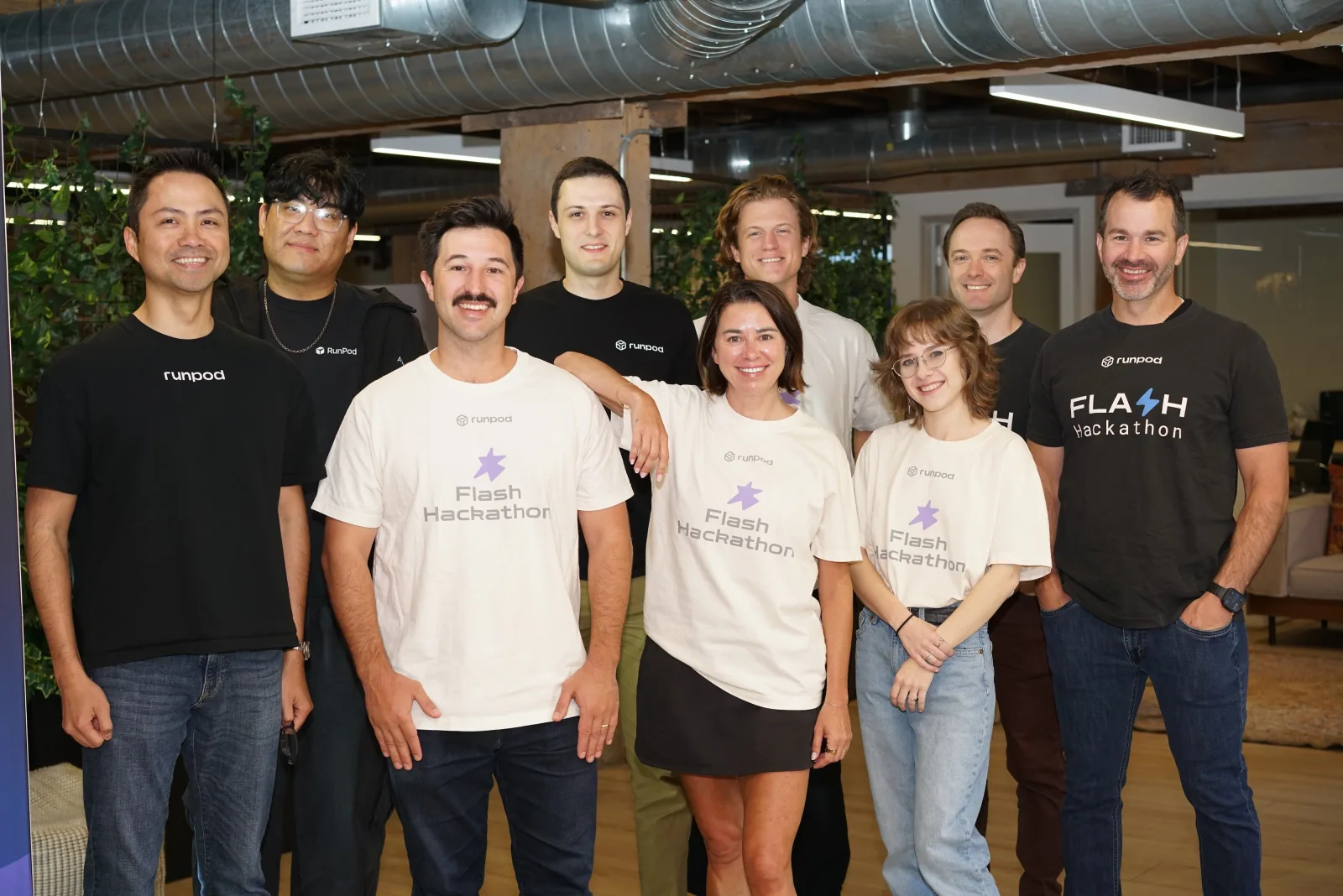
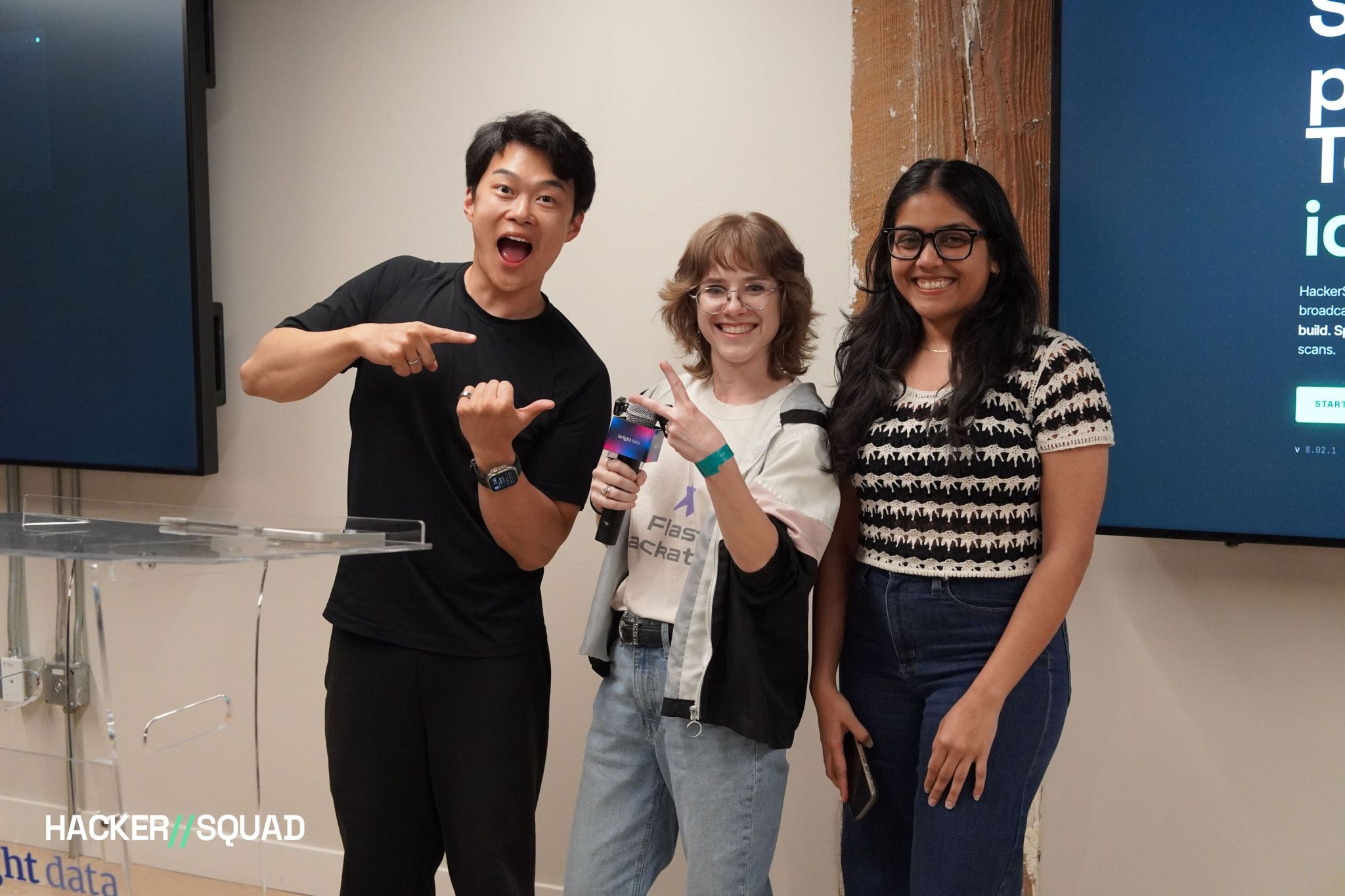
Our discerning Runpod judges.
A panel of Runpod judges reviewed every submission, narrowed the field, and the strongest projects took the stage. Three won the top prizes of cash and Runpod credits: $8,000 for first, $4,000 for second, and $2,000 for third. Here they are:
1st place: FlashML
Phong Cao built FlashML, a distributed machine learning platform that keeps the simplicity of scikit-learn and spreads the work across multiple Flash workers, with real-time visualization of what's happening as it runs. The familiar API stays put. The scale is new. It won Best Use of Runpod Flash and the $8,000 top prize.
Congrats to Phong Cao!
Watch his demo:
2nd place: FlashDock
Nelson Lai built FlashDock for drug discovery. It screens roughly 3,000 molecules against disease targets, fanning the work out across parallel GPU workers so a search that would crawl on one machine finishes in a fraction of the time. Second place, and $4,000.
2nd place winner: Nelson Lai
Watch the demo:
3rd place: Lifeline
Sulaxmi Raskar built Lifeline, a clinical trials ranking system that helps a patient find studies they actually qualify for in under 90 seconds. It takes a process that usually means hours of reading eligibility criteria and turns it into a short, ranked list. Third place, and $2,000.
3rd place winner: Sulaxmi Raskar
Watch the demo:
The rest of the field
Altogether we saw eleven products running on a GPU at the end of the day.
Anish Gupta, Pranav Achar, and Akul Patel built PathFinder, a navigation aid for blind users that runs object detection and depth estimation in the browser, with a retraining component on Runpod. Jalil Laaraichi built SenseSight, which turns robot sensor streams into inspectable 3D world models using Gaussian splats. Nelson Lai built Flash Gym, a safety training pipeline that pulls frames from venue footage and segments the hazards.
Shruti Mandaokar built Verdant AI, a sustainability assistant that reads a product's environmental impact through computer vision and OCR. Shresthkumar Karnani and Aditya Nagpal built SolarIQ, which scores land parcels for solar farms on irradiance, grid proximity, and community sentiment. John Sandalis and team built OpScore, a reproducible standard for measuring whether an AI agent can actually complete a live booking flow. Emanuel Gonzalez and Ranjiv Jithendran built Echo, which coaches your jump shot by analyzing your form with pose estimation. And the FlashBid team (Ali Amjad, Sanmukh Sain Karri, Bharath Raahul, Krishna, and Siddharth Reddy Seshampally) built a tool that reads electrical drawings and generates priced proposals. Congrats to everyone who participated.
Build something on Flash
Every project here started as a plain Python function and was running on a GPU by the end of the day. You do not need a hackathon to do that. Add the decorator, push to Flash, and your code is live on a GPU in minutes. The Flash docs and examples repo are enough to get your first endpoint up today.
Follow us on Linkedin, X, or Discord to learn about our next hack days.
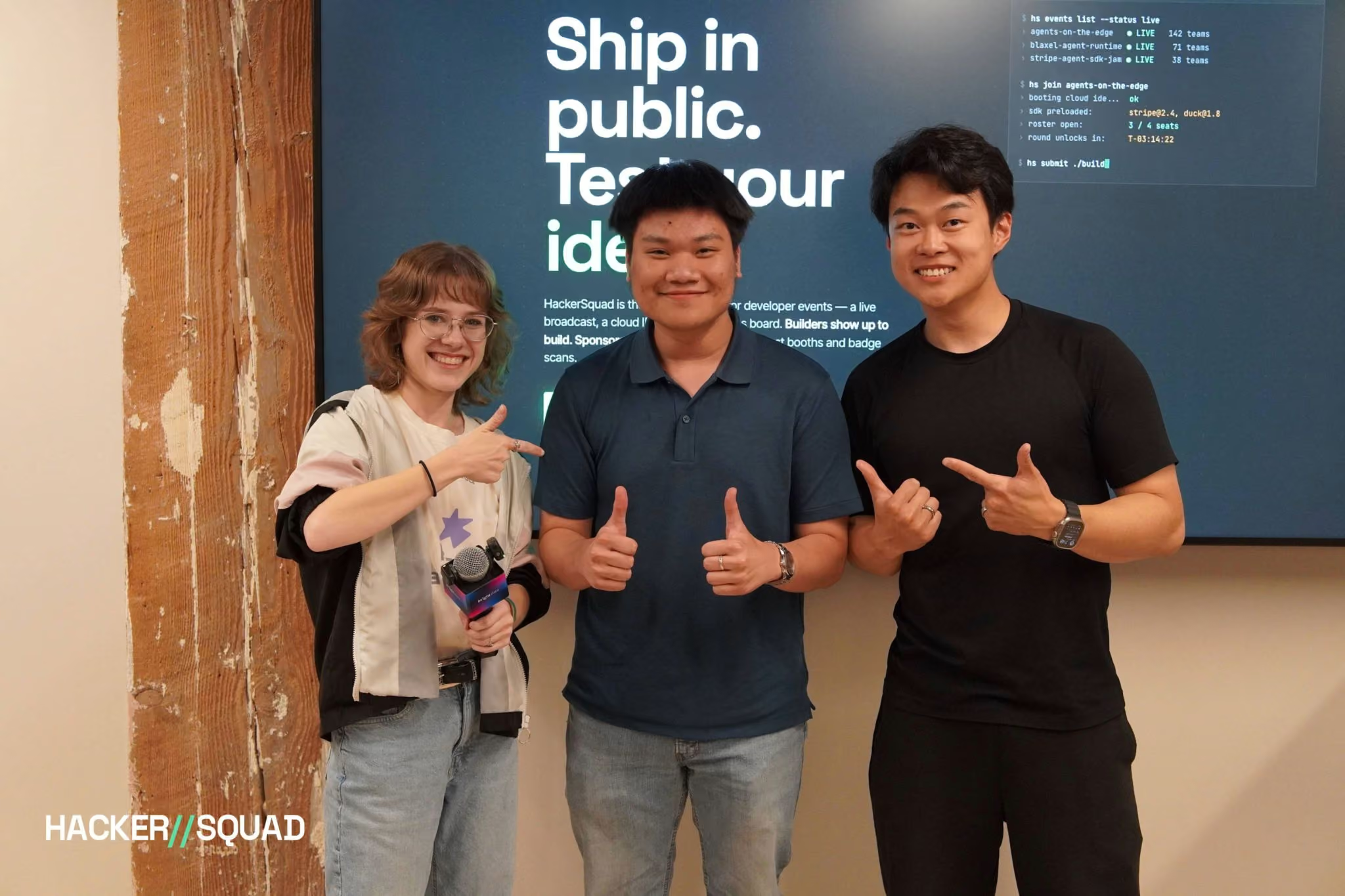
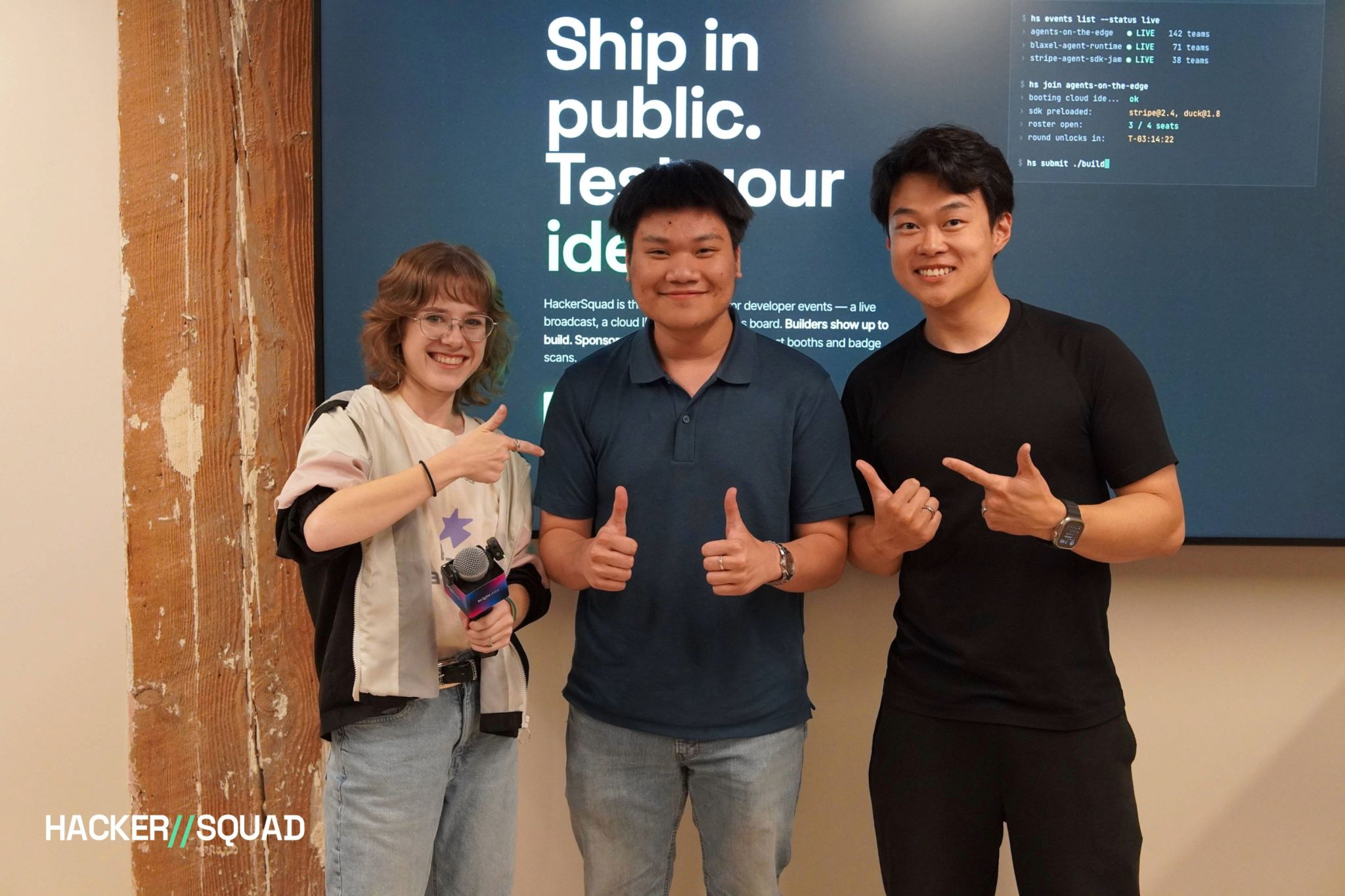
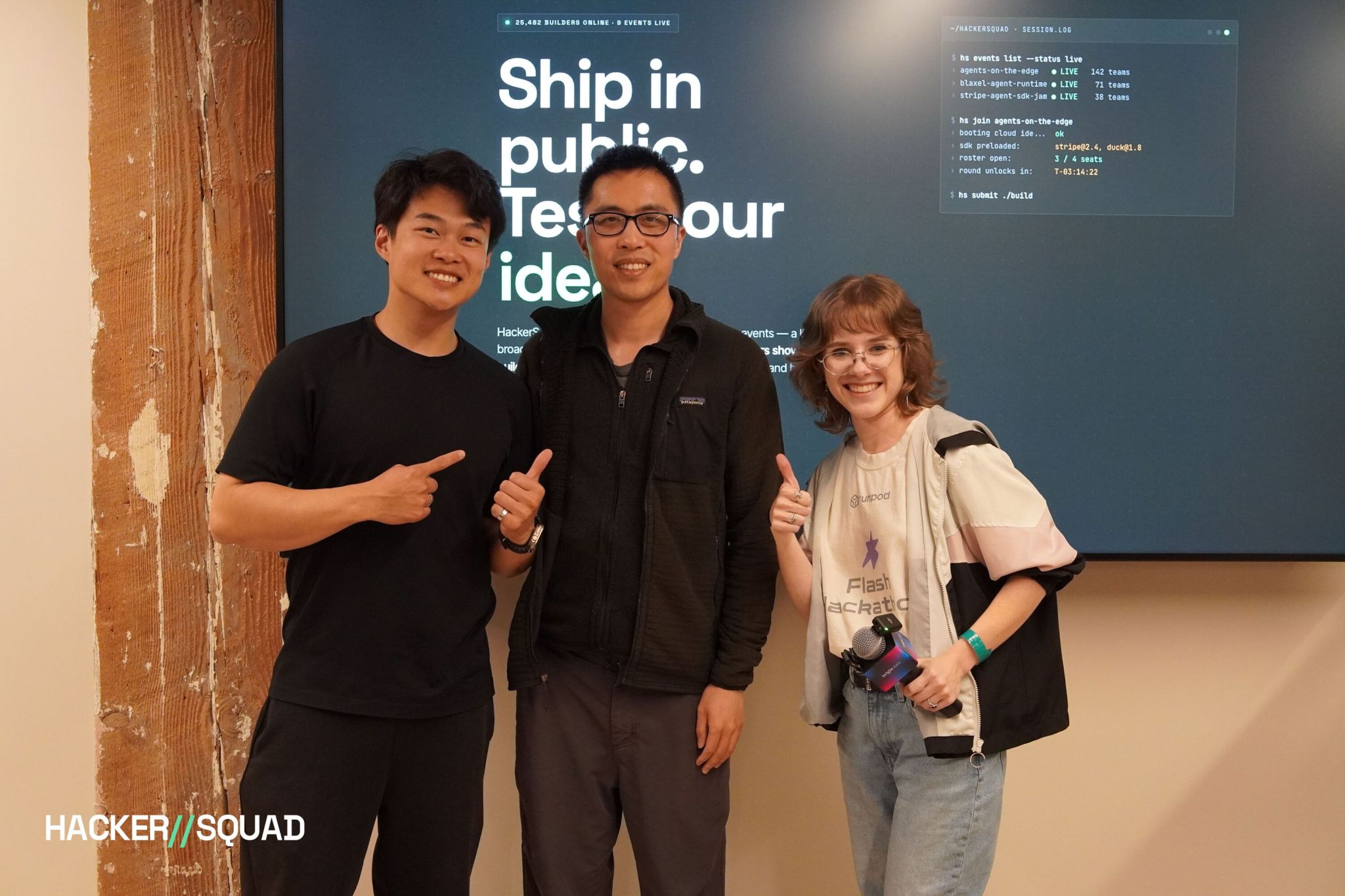
Special thanks to Hackersquad for co-hosting this wonderful event!