How Runpod Serverless billing works when a job fails to complete
Why your balance can drop even when nothing succeeds, how to find where the money went, and how to keep it from happening again.
All
 Skip to main content
Blog
Our PyTorch templates now cover 2.6 through 2.13 across multiple CUDA and Ubuntu versions, with a new CUDA dropdown in the Pod deploy flow so you can match a template to your GPU and workload.


Our PyTorch templates were overdue for an update. The old ones covered PyTorch 2.8, 2.4, 2.2, and 2.1, while the latest release is now 2.13. Each template supported one CUDA version, mostly on Ubuntu 22.04, and switching to a different CUDA version took a lot of clicking around. Community feedback said the same thing, so we rebuilt them.
We’re starting with the official templates. The new lineup covers PyTorch 2.6, 2.7, 2.8, 2.9, 2.12, and 2.13. Each version is available with several CUDA versions, such as 12.9, 13.0, and 13.2, on both Ubuntu 22.04 and 24.04. You can browse every version of a template on its Hub page.
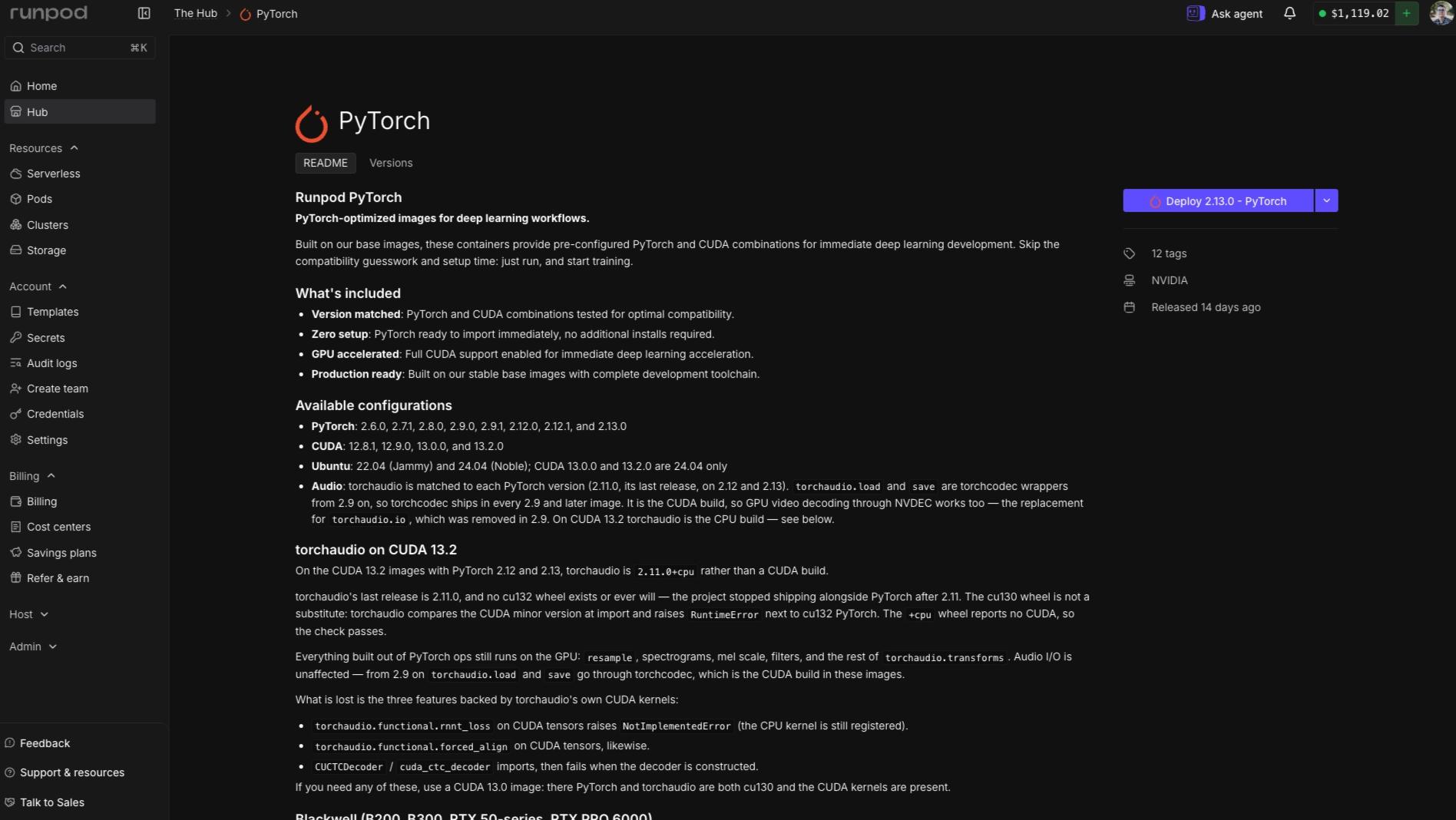
That works out to around 36 images for PyTorch alone, too many to browse as separate templates. So the workload section of the Pod deploy flow now has a CUDA version dropdown. Each template lists the CUDA versions it supports, which makes it easier to match one to your GPU and workload. ComfyUI templates are getting the same treatment next.
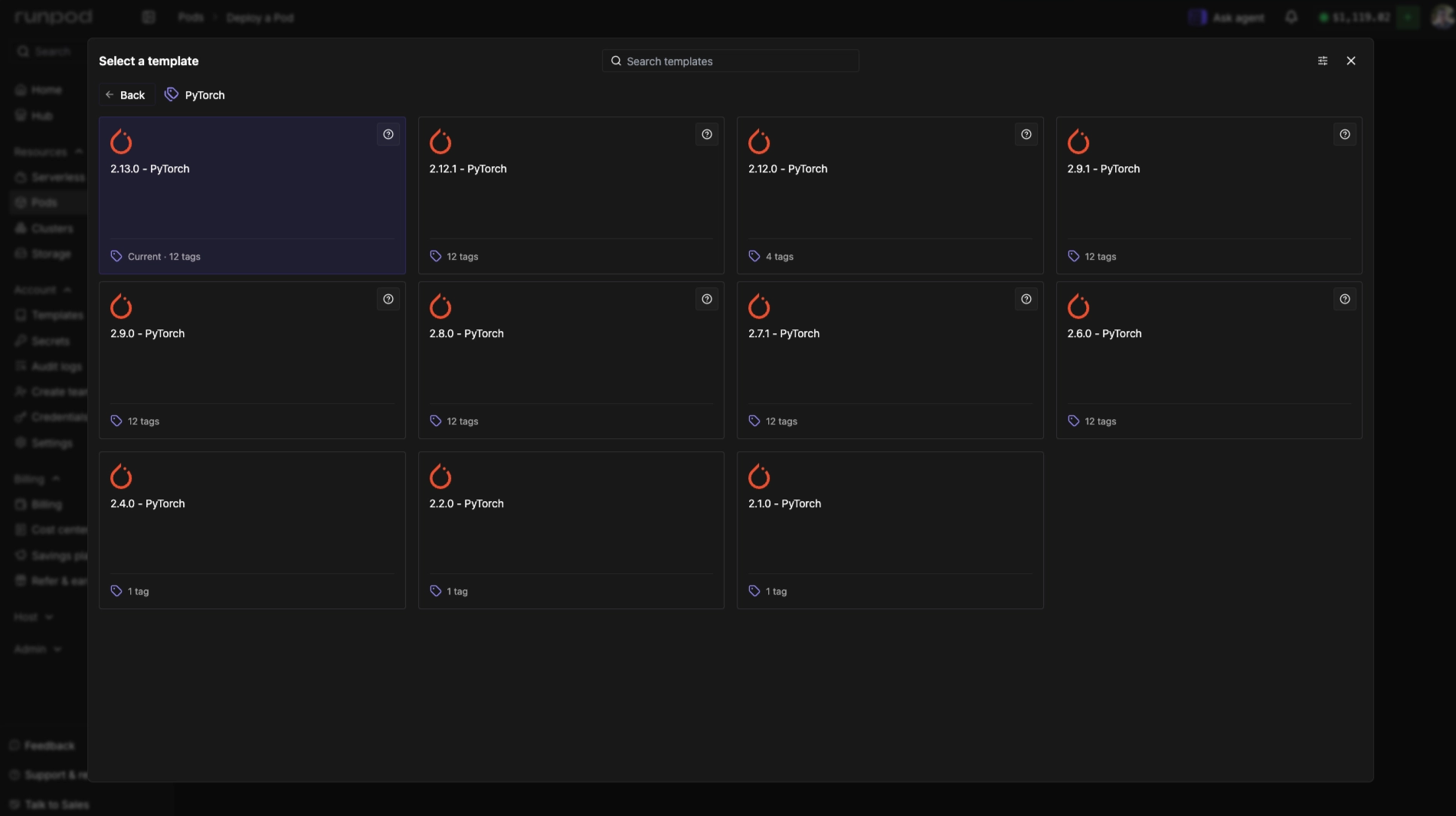
Templates and tags will now be marked deprecated and archived as they age. PyTorch 2.1, 2.2, and 2.4 aren’t disappearing. They’ll be imported into the new system and marked deprecated, with fewer CUDA and Ubuntu variants than the current versions.
Whether you're trying out a new model, configuring a training environment, or deploying an existing project, choosing the right combination of PyTorch, CUDA, and Ubuntu should be simple.
These updates give you more control over your environment with fewer steps to get started. Be sure to explore the updated PyTorch templates and share what you build in the #built-on-runpod channel on Discord.
Blog Posts