
How TOOL Scales Big AI Ideas on Runpod
Image Gen
All
 Skip to main content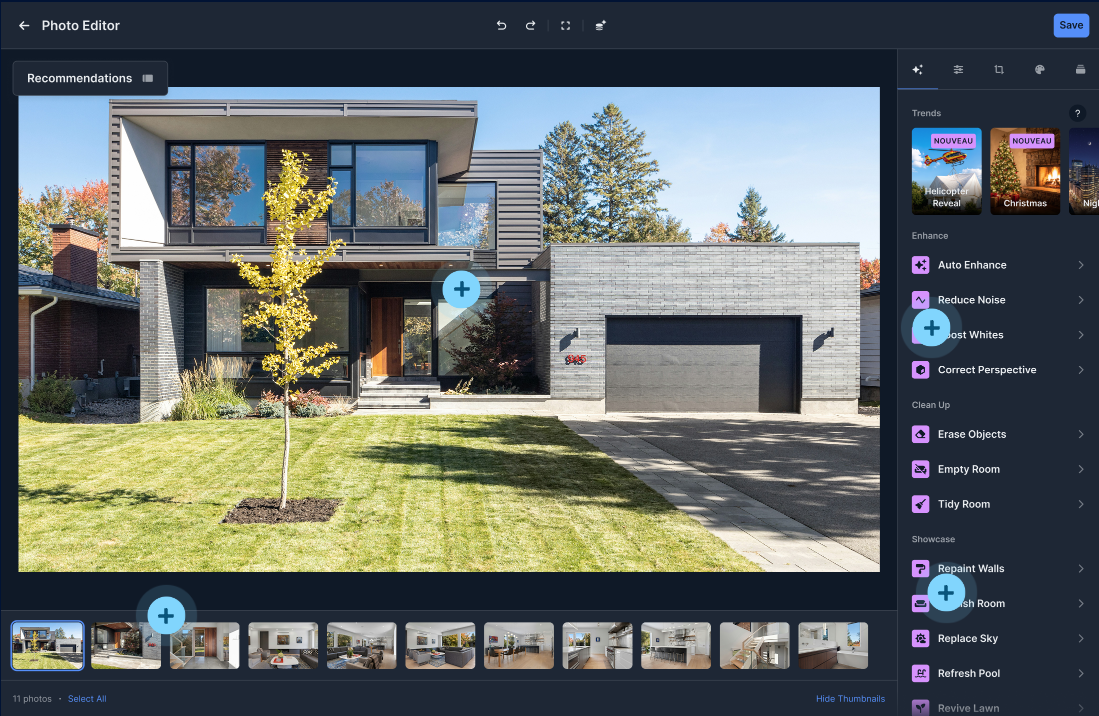
.png)
Every real estate listing starts with photos. For Nodalview's users — real estate agents — making those photos "sale-ready" used to mean slow turnaround and high costs. Virtual staging could run roughly $30 per image. Turnaround was typically 24 to 48 hours with little room to iterate.
Nodalview built a fully automated traditional + AI pipeline to bring that work in-house. After an agent uploads a shoot, the platform runs enhancement, virtual staging, and touch-ups automatically. Once workers are running, per-image processing is under a minute. The system now handles almost 1.5 million photos per month, including more than 50,000 on an average weekday.
Nodalview's whole stack ran on AWS, including the GPUs behind the AI pipeline, and the GPU layer is the only part that moved. AWS still runs the web platform, storage, authentication and the Kubernetes cluster.
The reasoning for moving inference was narrow. Dr Deniz Engin, Sr Computer Vision Engineer at Nodalview, says: "AWS is very reliable and has everything we need, but it is way more expensive than Runpod. With Runpod, we can choose the right card for the job."
Enhancement, virtual staging and room touch-ups are different jobs and don't all want the same hardware. "H100" alone covers three SKUs with different memory bandwidth and interconnect, so picking per workload means choosing the variant that fits the model instead of accepting whatever an instance family bundles.
Production inference then runs on Serverless while model development and training run on Pods, so moving between those two stages did not mean changing providers.
AWS is very reliable and has everything we need, but it is way more expensive than Runpod. With Runpod, we can choose the right card for the job.
-- Dr Deniz Engin, Sr Computer Vision Engineer, Nodalview
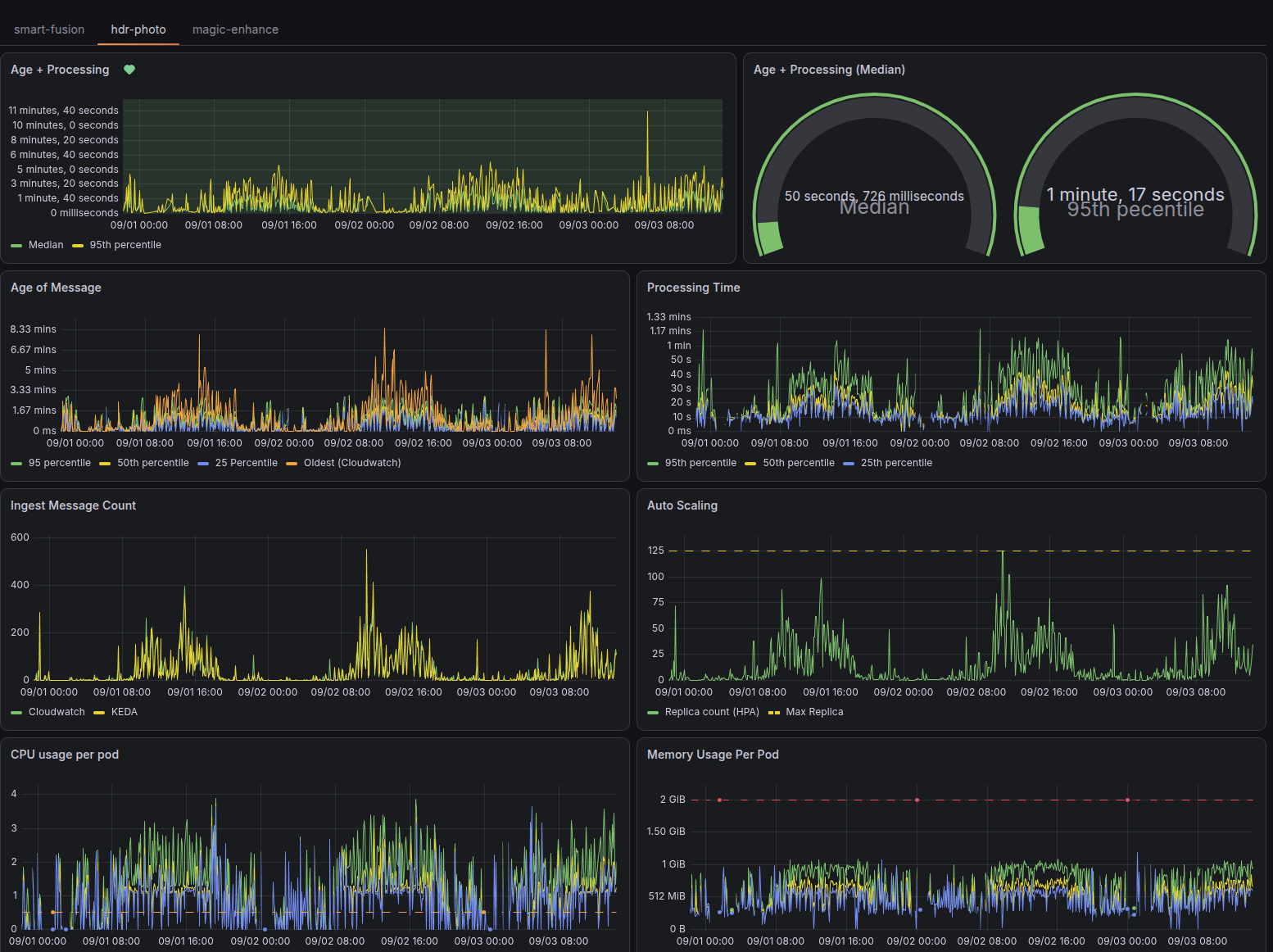
Real estate agents shoot during the day. Up to 70% of Nodalview's images arrive inside a single one-hour window in the afternoon. That spike shape drives the architecture: capacity sized for the peak sits idle most of the day, while capacity sized for the average can't clear the rush.
On AWS, Nodalview's Kubernetes autoscaling has handled jumps from 10 to 180 Kubernetes pods during similar spikes. Those are pods on their own cluster, unrelated to Runpod Pods.
The GPU layer absorbs the same shape through a different mechanism. A Serverless endpoint scales workers, which are Pods running the inference container, between a configured minimum and maximum. Idle workers sit in an exited state and bill nothing, so the maximum can be sized for the afternoon rather than for the average, and the quiet hours cost nothing to hold.
In a spike-driven pipeline, cold starts are not academic. If workers take too long to come online, the afternoon peak won't clear.
In a live test with a roughly 20GB model, Nodalview measured time to first inference on Runpod at about 20 to 25% faster than AWS and Google Cloud, roughly four to five minutes against six to seven.
That figure covers two costs, which is why it lands in minutes: pulling the container image, then loading 20GB of weights into GPU memory. Both are paid once per cold worker and neither is paid again while that worker stays warm.
Nodalview's AI generation succeeds 97.86% of the time. That number measures the output of the pipeline Nodalview built, and the team treats it as a product-quality metric.